Leefbare stad 2
Duurzame mobiliteit en sociale rechtvaardigheid

Leefbare stad 2
Duurzame mobiliteit en sociale rechtvaardigheid
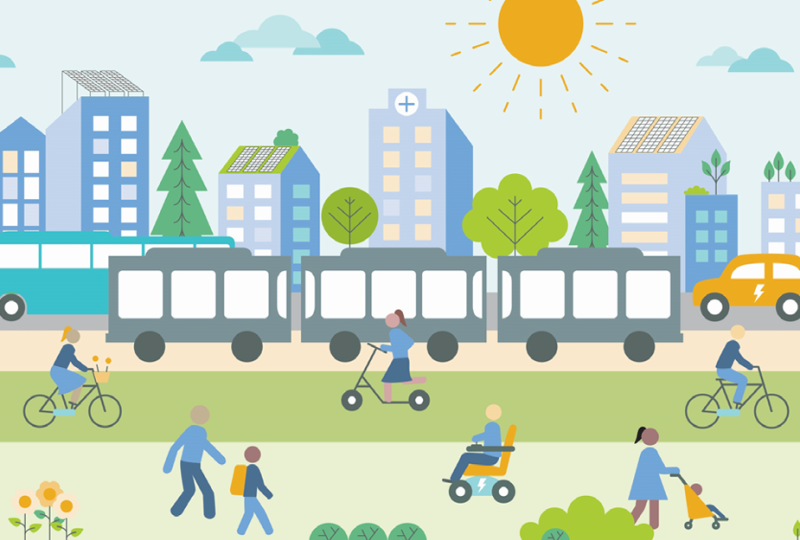
In the debate on sustainable mobility, the main focus seems to be on curbing CO2 emissions through Low Emission Zones and promoting electric cars.
The problem is that these ‘eco-friendly’ cars are unaffordable for many people, not to mention the environmental cost of mining for the raw materials needed for the batteries in electric cars.
Rarely is the car-dependency of our society actually called into question. And rarely are less fortunate people and families without a car or with an old polluting car taken into consideration; people for whom public transport in its current organisation offers no reliable alternative.
Why are sustainable mobility and social justice pitted against one another as polar opposites? What if we define climate transition as care for nature and for humans as well, as inseparable parts of that nature?
In Antwerp, we are already looking forward to the completion of the Oosterweel project, the covering of (parts of) the Ring Road and the greening it will bring. But the goal of the initiating Ringland citizens' movement was much more fundamental and ambitious from the start: a modal shift to an efficient and accessible public transport system and a priority for cyclists and pedestrians in the city.
How do we can we ensure that this modal shift is also socially just? How do we combat both climate change and transport poverty? How can we strive for sustainable, shared and inclusive mobility for all?
On these and other questions, Anouk Torbeyns, editor-in-chief of StampMedia, talks to researcher Thomas Vanoutrive (urban planner UAntwerpen), poverty fighter Bart Van Eeckhoven (project officer PSC Open House) and social innovator Esen Köse (project officer shared mobility at MPact).
With the series Leefbare Stad, Spreken is Goud examines what is going on in the city and how we can work towards a sustainable future for all, including in the field of housing and mobility. Indeed, sustainability not only involves care for the environment but also respect for the rights of every human being: social justice is a necessary condition for climate transition.