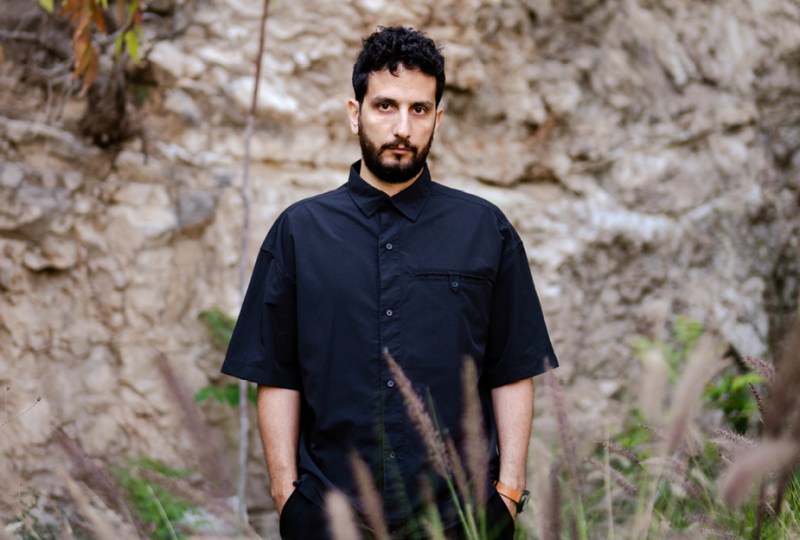
Faraj Suleiman's journey is not without obstacles: when you were born in Palestine in 1984, it is not easy to build an international career as a pianist. Even though his career was launched at the prestigious Montreux Jazz Festival and his name is known among many European music lovers. For 3 years he was stuck in Paris and could not return home to Haifa due to pandemics and wars.
The title of Suleiman's latest album As Much As It Takes, is therefore entirely appropriate. No matter what happens in his life, Suleiman never stops to compose and record new songs. The music by which he is overwhelmed is the expression of his joy, but also of his worries and his anger. His music is both instrumental and narrative, intimate and personal as well as universal and political. Any work by a Palestinian artist is, according to the pianist, intrinsically political.
As in his previous works, Suleiman creates a musical balance between Eastern and Western styles. Raised with Arabic music and trained in classical music, he follows his own way in contemporary jazz and the art of improvisation. On As Much As It Takes, this interaction translates into dialogues between the piano and the oud, the lyrical stringed instrument of the Middle East.
The 11 tracks from the new album As Much As it Takes, composed during a residency at the Cité Internationale des Arts in Paris and recorded in Switzerland, are a beautiful musical sublimation of the trajectory of a particularly promising Palestinian musician.