
The colonial curse. The relationship between the Moroccan state and the Rif
Book presentation by Yassin Akouh
- i.c.w. Uitgeverij Houtekiet

The colonial curse. The relationship between the Moroccan state and the Rif
Book presentation by Yassin Akouh
- i.c.w. Uitgeverij Houtekiet
2016. When fishmonger Mohsin Fikri is crushed in a garbage truck, the Riffins are fed up. They demand that their region finally be developed after decades of marginalisation: they want more jobs, better healthcare and - most importantly - recognition of their historic struggle against colonisation. In doing so, they also get support from the Riffin diaspora.
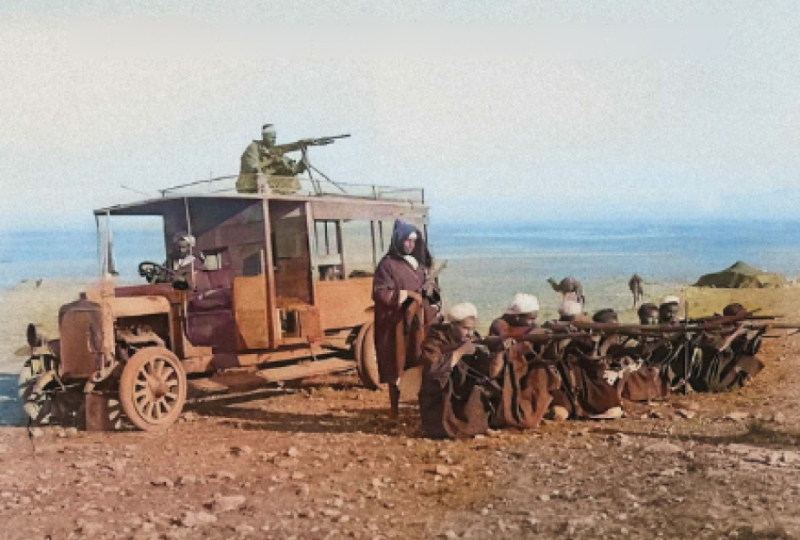
In the social movement that emerges after Mohsin Fikri's death, the 20th-century freedom fighter Abdelkrim al-Khattabi is a major inspiration. In the 1920s he nearly successfully fought Spanish and French colonisation, and after World War II he stood up for the liberation of the entire Maghreb: Morocco, Algeria and Tunisia.
When Morocco finally regains its independence in 1956, this has negative consequences for the Rif. Repressive policies follow and the economy is unstable. As the demand for migrant workers in Western Europe rises, many Riffins leave for the north, hoping for a better future. But history lives on, even thousands of kilometres away.
Author and journalist Yassin Akouh spent years researching this history of relations between Moroccan power and the Rif from the pre-colonial era to the present. To do so, he travelled abroad several times, searched archives and visited prominent activists, families and researchers.
On 14 April, he will present the result of this research in De Roma: Koloniale vloek. De relaties tussen de Marokkaanse staat en de Rif, published by Houtekiet and created with the support of the Fonds Pascal Decroos.
Rachida Lamrabet talks to the author and his guests: Btisam Akarkach, editor of the book Opstand in de Rif (EPO, 2019) and Mohamed Amezian, the son of the leader of the Riffin uprising of 1958-1959.